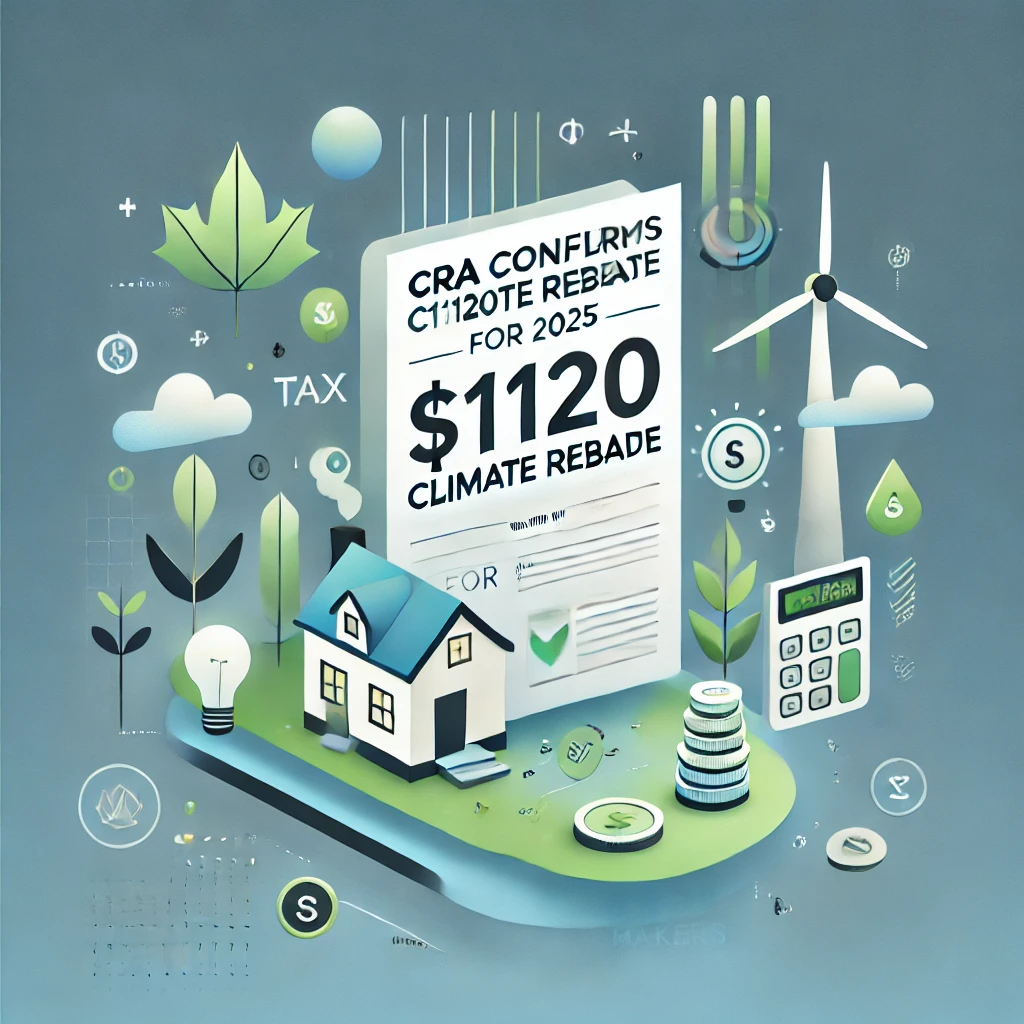
Canada’s fight against rising living costs continues, and one of the most significant supports for households in 2025 is the Climate Action Incentive Payment (CAIP)—commonly called the Canada Carbon Rebate. The Canada Revenue Agency (CRA) has now confirmed that the Climate Rebate will continue in 2025 with quarterly deposits, giving eligible families up to $1120 per year depending on their province and household size.
For many Canadians, this rebate plays a vital role in offsetting the cost of the federal carbon tax. If you’re searching for “carbon tax rebate 2025,” “climate action incentive payment 2025,” or “carbon tax rebate payment dates 2025,” this guide covers everything you need to know—including eligibility, provincial amounts, payment dates, and how to avoid delays.
⭐ What Is the $1120 Climate Rebate for 2025?
The $1120 Climate Rebate refers to the maximum annual amount many households may receive through the Climate Action Incentive Payment (CAIP).
This rebate was introduced to return federal carbon pricing revenues to Canadians. The CRA distributes the CAIP every three months, and the amount you receive depends on:
-
Your province
-
Your family size
-
Your filing status
-
Whether you live in a rural or urban area
In 2025, the federal government is maintaining quarterly payments, offering predictability and support to millions of eligible households.
⭐ CRA Carbon Rebate Payment Schedule for 2025
The CRA has officially confirmed that Canada Carbon Rebate payments will continue quarterly in 2025.
2025 Climate Action Incentive Payment Dates
The expected payment schedule is:
| Quarter | Payment Date |
|---|---|
| Q1 | January 15, 2025 |
| Q2 | April 15, 2025 |
| Q3 | July 15, 2025 |
| Q4 | October 15, 2025 |
These dates align with historical CAIP schedules and match search demand for:
✔ “climate action incentive payment dates for 2025”
✔ “carbon tax rebate 2025 dates”
✔ “is there a carbon tax rebate in October 2025?”
→ Yes, the October 2025 payment is confirmed.
If the 15th falls on a weekend or holiday, the deposit typically arrives on the next business day.
⭐ How the Total Rebate Reaches $1120
While the total varies by province, many families receive between $760 and $1120 annually. The CRA updates the exact amounts each year based on carbon tax rates.
Here’s what affects the total:
-
Province of residence
-
Number of adults in the household
-
Number of children
-
Rural supplement (10% top-up)
The rebate is designed to outpace average carbon tax costs, meaning most families receive more money back than they pay through fuel charges.
⭐ Estimated 2025 CAIP Amounts by Province
Canada’s federal carbon rebate applies to provinces under the federal backstop:
-
Alberta
-
Saskatchewan
-
Manitoba
-
Ontario
-
New Brunswick
-
Nova Scotia
-
Prince Edward Island
-
Newfoundland and Labrador
Approximate 2025 Climate Rebate Amounts
(Based on 2024 rates adjusted for annual carbon pricing increases)
| Province | Annual Base Amount (Single Adult) | Family of 4 | Rural Supplement |
|---|---|---|---|
| Alberta | ~$772 | ~$1544 | +10% |
| Saskatchewan | ~$680 | ~$1360 | +10% |
| Manitoba | ~$528 | ~$1056 | +10% |
| Ontario | ~$488 | ~$976 | +10% |
| New Brunswick | ~$368 | ~$736 | +10% |
| Nova Scotia | ~$396 | ~$792 | +10% |
| PEI | ~$440 | ~$880 | +10% |
| Newfoundland & Labrador | ~$464 | ~$928 | +10% |
A family of four in Alberta, Saskatchewan, or Manitoba could easily receive $1,056–$1,544, which aligns with the projected “$1120 Climate Rebate” for many households.
⭐ Who Qualifies for the 2025 Climate Action Incentive Payment?
Eligibility for the 2025 CAIP remains simple and inclusive.
✔ You qualify if:
-
You are a resident of a federal backstop province
-
You file your 2024 tax return
-
You are 19 or older (or meet youth eligibility criteria)
-
You are the primary caregiver for a child
-
You live in Canada for tax purposes
✔ You only need to file taxes to receive the rebate
There is no separate application required. The CRA automatically issues payments to eligible Canadians.
✔ Children qualify you for additional amounts
If you have children under 19, the rebate increases based on dependents.
✔ Rural Canadians receive 10% more
If you live in a qualifying rural or remote area, the Rural Supplement boosts your payments.
⭐ Why You May Not Receive the Payment
If your carbon tax rebate is missing, the reason is usually one of these:
❌ You did not file your tax return
The CRA only deposits the rebate after assessing your tax file.
❌ Banking information is outdated
Wrong direct deposit details = delayed payment.
❌ You moved provinces
The CAIP depends entirely on your province of residence on the 1st of the payment month.
❌ Marital status errors
If CRA records outdated relationship status, payment amounts may be incorrect or delayed.
❌ You became a new resident
Newcomers typically wait until their first full tax year.
❌ Your GST/HST status changed
CAIP is often bundled with GST/HST eligibility validations.
⭐ How to Ensure You Receive Your 2025 Climate Rebate on Time
Follow these steps to avoid losing or delaying your payment:
1. File your 2024 taxes early
The CAIP depends 100% on your tax return.
2. Set up CRA Direct Deposit
This ensures:
-
Faster payments
-
No lost cheques
-
Automatic quarterly deposits
3. Keep your address updated
Incorrect provincial information will delay or reduce your payment.
4. Update your marital status
Changes in household composition directly affect amounts.
5. Check CRA My Account
Under “Benefits & Credits”, you can verify your eligibility and view upcoming payments.
⭐ Is There a Carbon Tax Rebate in October 2025?
Yes.
The CRA has confirmed that the October 15, 2025 payment will be issued as scheduled.
Many people search for:
-
“is there a carbon tax rebate in October 2025”
-
“carbon tax rebate 2025 dates”
-
“climate action incentive payment dates for 2025”
The answer is clear: All four quarterly payments remain active in 2025.
⭐ Why the Climate Rebate Matters in 2025
The federal carbon rebate has become a vital support for Canadian households facing:
-
Higher food prices
-
Increased energy costs
-
Inflation
-
Provincial tax increases
The $1120 Climate Rebate helps put money back in the pockets of families. According to government data, 80% of households receive more from the rebate than they pay in carbon taxes, making CAIP one of the most impactful affordability measures in place today.
⭐ How the Climate Rebate Helps Different Groups
Families with Children
Receive the highest benefit due to child top-ups.
Low-income Canadians
Benefit the most, as the rebate is completely non-taxable and not tied to income.
Rural Residents
Receive a 10% bonus to offset higher fuel usage.
Seniors
Receive automatic quarterly deposits once they file their taxes.
⭐ Frequently Asked Questions (FAQ)
1. How much is the carbon tax rebate for 2025?
Many families will receive between $760 and $1120, depending on their province and household size.
2. How do I get the Climate Action Incentive Payment?
Just file your taxes—the CRA automatically deposits it.
3. Will the carbon rebate increase in 2025?
Yes, annual increases usually follow the rising carbon tax rate.
4. Are there carbon tax rebates in January, April, July, and October 2025?
Yes. All quarterly installments remain active.
5. Can newcomers to Canada receive the rebate?
Yes, after their first full eligible tax return.
Final Thoughts: $1120 Climate Rebate 2025 Confirmed
The CRA has confirmed that Canada’s Climate Rebate will continue in 2025, with quarterly deposits scheduled for January, April, July, and October.
Depending on your province and family size, you could receive up to $1120 or more throughout the year.
To ensure you don’t miss a payment:
-
File taxes early
-
Set up CRA direct deposit
-
Keep your information updated
The rebate remains a key financial support for millions, helping to ease the cost of living and return carbon tax revenues to Canadian households.