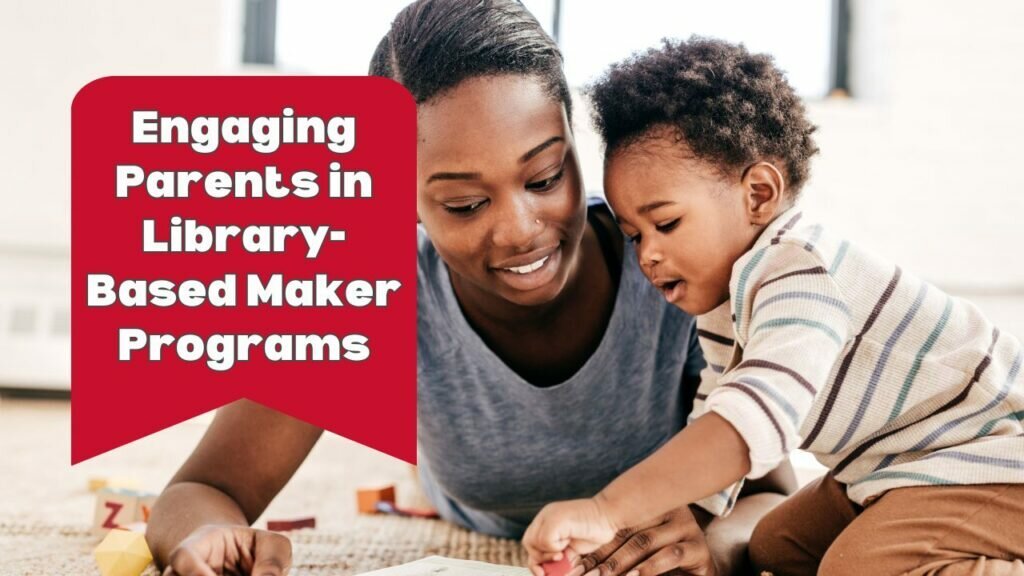
In an era where maker culture is increasingly integrated into libraries, encouraging parental engagement in library-based maker programs becomes vital.
Library makerspaces—equipped with tools like 3D printers, electronics kits, craft supplies, and robotics—offer unique opportunities for hands-on learning, creativity, and family collaboration.
However, many maker programs focus primarily on children, overlooking the power of involving parents as partners.
This article explores the latest insights, strategies, and real-world data for engaging parents, ensuring that maker programs become family learning hubs, not only for children, but for entire households.
When parents are actively involved, children benefit not only from access to creative tools but also from parental encouragement, scaffolding, and co-learning.
Studies show that caregivers who engage in maker-style learning help children develop stronger science, technology, engineering, and math (STEM) mindsets.
According to the Parent Perceptions of Librarianship 2023 survey, 92% of parents trust librarians to select appropriate materials, and 96% feel their children are safe in libraries.
This existing trust is a foundation on which makerspace programming can build deeper parent engagement.
Maker programs can help reduce the digital divide and support underserved families. Libraries are free and trusted public spaces.
By bringing parents into maker programs, libraries help empower them with knowledge about new technologies and how to support their children’s learning—creating more equitable access to innovation.
When parents become co-creators, they are more likely to advocate for library funding, maker programming, and robust STEM access in their communities. Engaged parents help sustain and expand maker initiatives over time.
Before diving into strategies, it’s essential to recognize common barriers:
| Challenge | Description |
|---|---|
| Time constraints | Many parents are busy with jobs, commuting, or domestic responsibilities, leaving little time to attend library programs. |
| Confidence and skills gap | Some parents feel intimidated by technology or maker tools and fear they can’t contribute meaningfully. |
| Perception that makerspaces are “for kids only” | Libraries may implicitly frame maker programs as children’s activities, discouraging adult participation. |
| Communication and outreach gaps | Program information may not reach parents in accessible or motivating forms. |
| Logistical barriers | Transportation, childcare for siblings, or scheduling conflicts can prevent participation. |
Understanding these obstacles is the first step toward designing programs that truly include parents, not as an afterthought, but as core participants.
See also How Grandparents and Caregivers Can Support Early Making
- Promote programs in multiple channels—email newsletters, social media, school flyers, parent-teacher meetings, library notice boards.
- Use language that invites “families” or “parents and children together”, rather than children alone.
- Offer incentives like light refreshments, small giveaways, or maker kits to take home.
- Collaborate with schools and parent associations to spread awareness and co-host events.
- Involve parents in planning: invite them to focus groups to suggest maker themes or materials.
- Use surveys or suggestion boxes to collect parent ideas.
- Pilot “Parent Advisory Maker Groups” that meet regularly and help inform programming priorities.
- Provide short tutorials, quick how-to guides, or demonstration stations that ease parents into unfamiliar tools.
- Use maker facilitators or teen mentors who assist parents during sessions.
- Offer structured prompts and scaffolds—e.g., design prompts or conversation cues—to guide parent-child interaction, as in pop-up aerospace maker workshops where prompts helped parents reflect, define problems, and maintain activity flow.
- Design drop-in “family maker nights” or weekend maker cafés that encourage social mingling.
- Create collaborative challenges where parent teams and child teams share ideas or compete in friendly maker tasks.
- Promote peer sharing: parents who attend can showcase their work, tell their stories, and encourage new families to join.
- Link maker programming with other library services (e.g., literacy, STEM, English classes) so parents already attending for other offerings cross into maker experiences.
- Offer maker take-home kits or “maker backpacks” that families can check out and use at home together.
- Use pop-up makerspaces at community events, health fairs, or schools to expand reach beyond the library walls.
See also What We’ve Learned From a Decade of Library Maker Programs
These five strategies—Reach Out, Raise Up, Reinforce, Relate, Reimagine—mirror the PLA / Harvard Family Research Project’s “5 Rs” framework for family engagement in libraries.
A U.S. library initiative distributed maker kits (MAKEngineering Bags) to families for at-home maker exploration. The project demonstrated how library support could scaffold family maker engagement beyond the library walls.
In six pop-up makerspace programs held in libraries and one museum, 20 families (22 adults, 25 children) built a lunar rover model. Discussion prompts and scaffolding helped parents lead productive conversations with children and act as learning partners.
A public library designed interactive sessions where caregivers and preschoolers engaged in math and science through storytelling, helping caregivers adopt new questions and support children’s emerging STEM learning.
While there were no statistically significant differences in caregiver perceptions, the intervention demonstrated that prompting parents to ask “why” and “how” questions improved their interaction behaviors.
As of a 2017 survey, 55% of elementary and 61% of middle school libraries offered maker activities.
This shows growing adoption of maker spaces in the K–12 context—but many libraries still struggle to engage parents in synergy with classroom maker settings.
When designing evaluations, libraries should track both quantitative and qualitative data points to assess parent engagement:
| Metric Category | Sample Indicators | Why It Matters |
|---|---|---|
| Participation | # of parent attendees per program; % of total participants who are parents | Baseline measure of parent involvement |
| Retention | Repeat attendance by the same parent or family | Indicates sustained engagement |
| Parent Confidence & Skills | Pre/post self-reports on comfort with tools, confidence levels | Measures growth in parent ability |
| Parent-Child Interaction Quality | Observational rubrics (e.g. scaffolding, questioning) | Assesses how well the parent and child co-learn |
| Outcomes for Children | Changes in creativity, problem-solving, persistence | Shows impact on children’s learning |
| Parent Feedback & Suggestions | Surveys, interviews, focus groups | Provides qualitative insight and improvement ideas |
Libraries may also segment data by demographics (e.g., income level, ethnicity, educational background) to ensure inclusion and equity.
See also Transforming Story Corners Into Maker Spaces: A Library Guide
- Needs Assessment
Survey or focus group parents: What interests them? What scheduling works? What barriers exist? - Pilot Program
Launch a small-scale “Family Maker Night” to test scheduling, staffing, and appeal. Collect feedback. - Refine Based on Feedback
Adjust themes, length, scaffolding, adult support, communication. - Scale Up & Promote
Use multiple media channels; partner with schools and parent groups. - Sustain & Innovate
Phase in advanced workshops, take-home kits, pop-up sites, or parent mentor roles. - Monitor & Evaluate
Use metrics above; gather stories; iterate annually.
- Assume Parents Know Tech
Many parents lack experience with maker tools. Begin with simple, guided projects. - Make It Too Child-Centered
Avoid treating parents as passive observers. Design roles for them in the making process. - Poorly Scheduled Times
Evening or weekend slots may be better than weekdays after school. - Lack of Ongoing Communication
Don’t just run a one-off event. Build a calendar, send reminders, and cultivate momentum. - Neglect Cultural Relevance
Offer maker themes that reflect community interests and cultural backgrounds.
Engaging parents in library-based maker programs transforms libraries from child-focused workshops into vibrant family learning ecosystems.
By applying the 5 Rs framework—Reach Out, Raise Up, Reinforce, Relate, Reimagine—libraries can move beyond mere invitations and foster true co-creation.
Real-world examples offer proof that parent participation enriches learning, expands trust, and builds advocacy.
Through careful planning, scaffolding, outreach, and evaluation, libraries can ensure that maker programs truly belong to the family, not just the child.
As parents shift from spectators to creative partners, the impact multiplies—strengthening children’s outcomes, empowering caregivers, and cementing the library as an essential hub of lifelong innovation.
Libraries can provide scaffolded tutorials, one-on-one support, peer mentors, and low-stakes starter projects. Emphasizing “learning together” rather than expecting mastery helps build confidence.
Evenings (e.g. 6–8 pm), weekend slots, or after-school windows often work best. Rotating times helps accommodate varied family schedules.
Yes. Pop-up makerspaces in community centers or schools, take-home maker kits, mobile maker labs, and outreach via partner organizations help bring experiences to underserved families.