In a rapidly changing world, the idea of lifelong learning is no longer optional — it’s essential. Traditional education cannot fully prepare individuals for the evolving demands of technology, economy, and society.
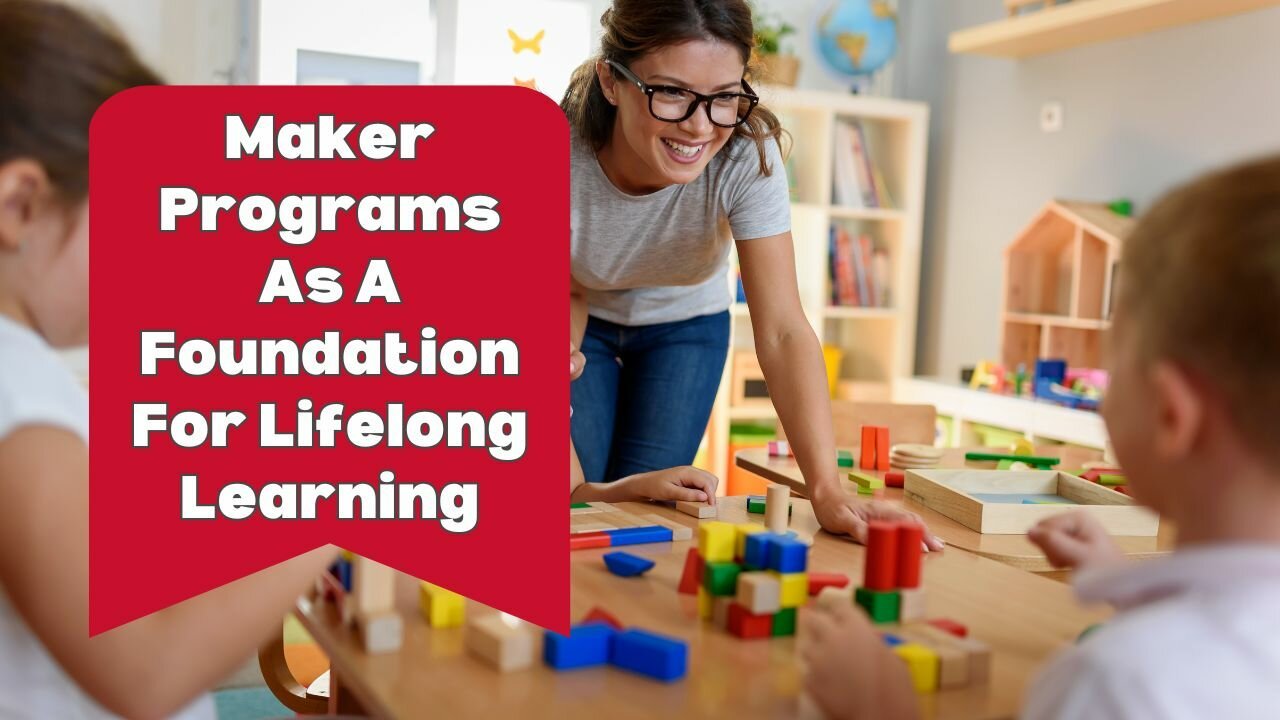
That’s where maker programs and makerspaces come in: they offer a dynamic, hands-on environment where learners of all ages experiment, tinker, fail, iterate, and create.
These programs serve not just as extracurricular novelty, but as a foundation for lifelong learning — fostering curiosity, resilience, adaptable skills, and a mindset of continuous growth.
In this article, we explore in depth what maker programs are, their benefits, research findings, implementation strategies, challenges, and how they can support a lifelong learning ecosystem.
Maker education is an approach that emphasizes learning by doing, encouraging participants to design, build, tinker, and iterate on projects.
It often takes place within makerspaces or dedicated physical/virtual labs equipped with tools like 3D printers, electronics (Arduino, Raspberry Pi), laser cutters, woodworking tools, craft supplies, VR kits, and more.
Key characteristics of maker education include:
- Project-based and problem-based learning
- Interdisciplinary approaches (STEAM: Science, Technology, Engineering, Art, Mathematics)
- Peer learning and collaboration
- Iteration, failure, and “failing forward”
- Learner-driven interests
Maker education grew out of the broader maker movement, a culture of DIY, hardware hacking, and open innovation.
As the maker movement spread, educators saw the potential to bring it into formal and informal learning contexts.
Maker programs build skills highly relevant for modern life and work: critical thinking, creativity, problem-solving, collaboration, resilience, adaptability, and digital literacies.
Hands-on, open-ended projects encourage learners to tackle complexity and ambiguity — experiences often missing in traditional classroom settings.
Maker environments can bridge worlds: school curriculum on one side, and personal exploratory learning on the other.
They allow learners to pursue self-directed interests, experiment without high-stakes failure, and connect learning to real-world contexts.
Maker programs naturally embed iteration and failure into the learning process.
Learners are encouraged to try, fail, reflect, and try again — fostering resilience and a growth mindset necessary for lifelong learning.
See also Balancing Structure and Exploration in Maker Programs
Well-designed maker programs can democratize access to advanced tools.
In under-resourced communities, maker initiatives using repurposed materials, e-waste, or community workshops help learners engage with technology who might otherwise lack access. (E.g., e-waste maker workshops engaging under-resourced communities)
Because maker work is often learner-driven and personally meaningful, it can sustain intrinsic motivation over time — a key element in lifelong learning.
- A systematic review of maker education programs (2019–2023) shows increasing interest in integrating maker education into teacher professional development; but gaps remain in how best to train educators for maker pedagogy.
- A study found that participation in makerspaces enhances engagement and learning quality in children, as measured by the Characteristics of Effective Learning (CoEL).
- Research in motivational factors shows that maker programs increase interest in STEM learning through design-based, hands-on activities.
- In early childhood contexts, maker spaces have been shown to support emotional well-being, autonomy, and positive affect as children engage in self-directed making.
- In formal and informal environments, maker education is increasingly used in libraries, schools, and community centers due to its deep learning affordances (e.g., constructing both physical and digital artifacts).
- Libraries embracing maker programs report enhanced participation, new user demographics, and richer engagement with technology.
- Public library maker users cite improved collaboration, problem-solving, and enjoyment in learning new skills.
These findings affirm that maker environments are more than novelty — they can contribute meaningfully to lifelong learning trajectories.
To see how maker programs can be foundational over a lifetime, we can map their contributions across life stages and learning domains:
| Stage / Domain | Role of Maker Programs | Examples / Outcomes |
|---|---|---|
| K–12 / Early Learning | Stimulate curiosity, build foundational design thinking, link concepts to making | Students build circuits, robots, craft projects, coding tasks |
| Secondary / Vocational Education | Deepen expertise, merge theory & practice, prepare for careers | Technical electives, capstone projects, cross-disciplinary builds |
| Higher Education / Research | Innovation labs, maker incubators, interdisciplinary research | University makerspaces, student startups, prototyping centers |
| Adult / Community Learning | Upskilling, hobbyist exploration, lifelong learners | Community maker workshops, library labs, adult classes |
| Retirement / Later Life | Creative engagement, mental stimulation, legacy projects | Crafting, legacy tech projects, mentoring younger makers |
By weaving maker experiences throughout each life stage, learning becomes continuous, self-directed, and adaptive.
See also Maker Learning And Social-Emotional Development For Ages 2–6
To make a maker program foundational and sustainable, certain design principles and strategies matter:
- Provide diverse, accessible tools (from low-tech to high-tech)
- Ensure safety, maintenance, and accessible workspace
- Use scalable, low-cost materials when possible
- Blend open challenges (free exploration) and structured projects
- Scaffold experiences (gradually increasing complexity)
- Embed reflection, documentation, and iteration
- Train facilitators in maker pedagogy (guiding without dictating)
- Encourage mentorship, peer coaching, and communities of practice
- Provide ongoing support and professional development
- Lower barriers to entry (free or subsidized access)
- Use repurposed materials (e-waste, recyclables) for equity
- Use multilingual, culturally responsive design
- Connect learners across ages, geographies, and disciplines
- Host maker fairs, showcases, and collaborative challenges
- Partner with local organizations, libraries, universities
- Maker’s Asylum (India): Originally founded in Mumbai, Maker’s Asylum now operates across India with programs like “Innovation School” and open workshops. Over time, they scaled to train over 100,000 individuals in hardware design and digital fabrication.
- Public Libraries with Makerspaces: Many public libraries have introduced maker labs, enabling community residents of all ages to experiment with 3D printers, microcontrollers, crafts, and digital tools.
- University Maker Labs & Incubators: Institutions embed makerspaces in engineering, art, and cross-disciplinary centers — supporting student innovation, research prototyping, and startup ventures.
- E-waste Maker Workshops: Programs in underserved communities have taught participants to reclaim and redesign e-waste into usable devices, fostering both technical skills and creative agency.
These cases show how maker programs can evolve from local nodes to systemic pillars in lifelong learning ecosystems.
See also How Libraries Can Create Low-Cost Maker Spaces For Early Learners
While promising, maker programs also face obstacles:
- Sustainability / Funding: Tools, space, staff, maintenance are expensive. Many maker labs struggle after initial funding dries.
- Educator Training Gap: Many teachers or facilitators lack experience in maker pedagogy; professional development is needed.
- Measuring Impact: Standard metrics (test scores, grades) may not capture maker learning outcomes (mindset, resilience, creativity).
- Equity & Access: Without intentional design, maker programs can widen inequalities if advantaged students dominate access.
- Integration with Formal Systems: Aligning maker activities with standards, assessments, and school curricula can be challenging.
Addressing these challenges is crucial to ensuring maker programs are truly transformative and sustainable.
- Embed Maker Education in Formal Curriculum: Schools and systems should recognize making as a valid learning modality.
- Fund Long-Term Operations: Beyond initial capital, ensure funding for staff, maintenance, and evolving tools.
- Professional Development & Certification: Train educators to facilitate maker learning effectively.
- Community Partnerships & Networks: Leverage local libraries, industry, nonprofits to scale access.
- Design for Inclusion: Use low-cost materials, mobile maker labs, virtual maker platforms to reach marginalized communities.
- Develop Assessment & Research Frameworks: Create methods to evaluate maker outcomes in creativity, mindset, collaboration—not just content recall.
- Promote Lifelong Integration: Encourage maker options in adult education, libraries, community centers, retirement programs.
Maker programs hold tremendous promise as a foundation for lifelong learning.
By offering hands-on, learner-driven, creative, and iterative environments, they nurture not only technical skills but the mindsets and dispositions essential for continuous adaptation.
While challenges remain — funding, integration, equity, assessment — the potential is clear: maker education can be a powerful bridge across life stages, empowering individuals to remain curious, capable, and resilient in a changing world.
For education systems, communities, and learners, investing in maker programs is more than a trend — it’s an investment in a culture of lifelong innovation, growth, and learning.
Yes. Adults benefit from maker programs through upskilling, creative exploration, community engagement, and maintaining cognitive vitality over time. Maker spaces in libraries and community centers often serve adults seeking new skills or hobbies.
Success goes beyond test scores. Useful metrics include learner reflection, portfolio of projects, iteration cycles, collaboration and communication improvements, growth in confidence, and ongoing engagement in maker activities.
Begin small. Start with a pilot makerspace or maker corner, collect tools and materials, recruit enthusiastic facilitators, host open challenges, and iterate. Build community partnerships (local makers, libraries, businesses) to expand footprint over time.