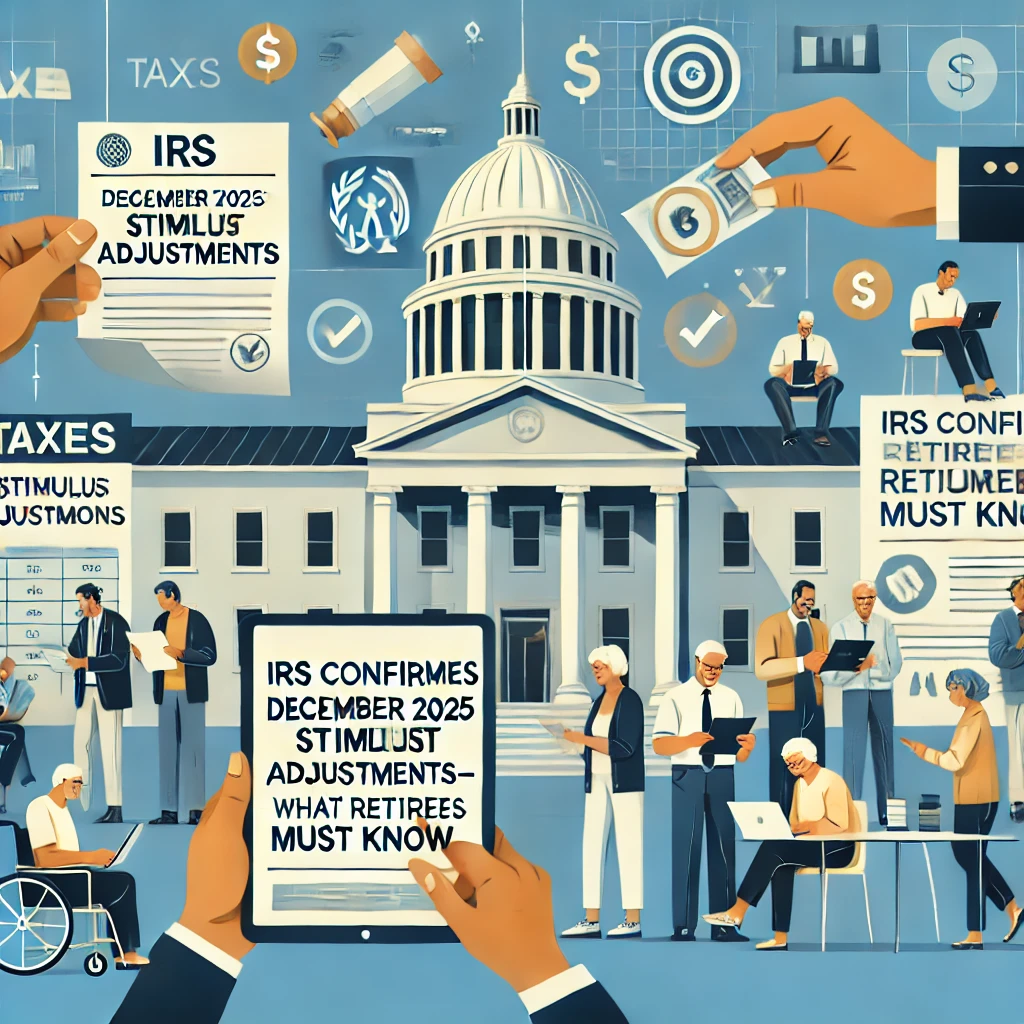
As inflation, economic uncertainty, and rising medical costs continue to shape the financial landscape of 2025, the IRS has officially confirmed December 2025 stimulus-related adjustments that retirees must pay close attention to. Although these are not new stimulus checks, they are important IRS-driven updates that directly affect tax credits, benefit structures, retirement withdrawals, and eligibility thresholds.
For millions of retirees living on fixed incomes, these IRS adjustments will influence how much money they keep, how much they must withdraw, and whether they can qualify for certain benefits during the final month of the year. If you’re a Social Security recipient, a pensioner, or someone relying on retirement savings, December is a critical month to review these new rules before heading into 2026.
This article breaks down everything retirees need to know about the IRS-confirmed December 2025 stimulus adjustments, how the rules impact taxes and benefits, and what steps seniors should take to maximize savings and avoid penalties.
What Are the “December 2025 Stimulus Adjustments”?
The term refers to a group of IRS adjustments taking effect or being finalized in December 2025. These include:
-
Updated income thresholds
-
Revised tax credit eligibility amounts
-
Inflation adjustments for seniors
-
Retirement withdrawal requirements
-
Stimulus-related tax refund corrections
-
New IRS payment guidelines for retirees
These adjustments are part of the IRS’s routine end-of-year updates, but with inflation trends, cost-of-living pressures, and high consumer spending, the December 2025 changes are more significant than usual.
While no federal stimulus checks are currently scheduled for December 2025, the IRS has made stimulus-related tax adjustments that retirees should understand—especially those who file for refundable tax credits in 2026.
Key IRS Adjustments Retirees Must Know for December 2025
Below is a detailed breakdown of the most important adjustments that directly impact retired taxpayers.
1. Updated Income Thresholds for Seniors (Inflation-Driven Adjustment)
The IRS adjusts tax brackets annually based on inflation. For retirees, this impacts:
-
How Social Security benefits are taxed
-
Whether they fall into a higher or lower tax bracket
-
How much of their retirement income becomes taxable
The December 2025 updates increase income thresholds for 2026 filings, meaning retirees will have slightly more breathing room before entering a higher tax bracket.
Good news for retirees:
Higher thresholds mean more income stays untaxed, especially for:
-
Social Security recipients
-
Pension retirees
-
IRA/401(k) withdrawal users
This adjustment essentially acts like a tax relief boost for seniors heading into 2026.
2. IRA & 401(k) Required Minimum Distribution (RMD) Rule Updates
Retirees aged 73 and older must take a Required Minimum Distribution (RMD) from their retirement accounts.
In December 2025, the IRS confirmed:
✔ New RMD life expectancy tables
These tables adjust the amount retirees must withdraw, typically lowering required withdrawals slightly.
✔ Penalty adjustments
The penalty for missing an RMD remains high at 25% of the amount not withdrawn, but there is a reduced penalty at 10% if corrected promptly.
✔ Roth 401(k) RMD elimination continues
Roth accounts in employer plans remain RMD-free, a benefit continued into 2026.
For seniors relying on savings to last through retirement, these IRS updates help minimize forced withdrawals.
3. Stimulus-Related Tax Credits Remain Available for 2025 Filers
Although no check is being mailed in December 2025, the IRS has confirmed that stimulus-related refundable credits remain available when retirees file their taxes in early 2026.
These include:
• Recovery Rebate Credits
For seniors who never received the full stimulus amount in previous years due to processing errors or filing updates.
• Earned Income Tax Credit (EITC) Senior Eligibility
Retirees with part-time earned income still qualify for an expanded credit threshold.
• Senior Taxpayer Credit Increases
Inflation-adjusted credit values give retirees slightly more benefit for tax year 2025.
Retirees should review eligibility in December so they do not miss out on credits that effectively act like a retroactive stimulus payment.
4. IRS Adjusts Standard Deduction for Seniors for 2025 Returns
The IRS confirmed the increased standard deduction for seniors (65+) entering the 2026 tax season. The higher deduction can reduce taxable income significantly.
For 2025 filings (submitted in 2026), the deduction increases:
-
For single seniors
-
For married couples where one or both spouses are 65+
This functions like a built-in stimulus because it lowers the tax burden without needing a direct payment.
5. Health-Related Tax Adjustments for Retirees
With Medicare costs rising, the IRS has adjusted:
✔ Deductible medical expense thresholds
✔ Health savings account (HSA) contribution limits
✔ Long-term care insurance deduction caps
These IRS updates help seniors recover more costs through tax deductions, easing financial pressure at the end of 2025.
What These IRS Adjustments Mean for Retirees in December 2025
The IRS’s new rules make December a crucial time for older Americans to evaluate their finances. Here’s what they mean:
1. More Tax Savings in 2026
Higher thresholds + higher deductions mean less taxable income.
2. Better Credit Eligibility
Many seniors qualify for extra refundable credits without realizing it.
3. Lower Required Withdrawals
New RMD guidelines help retirement savings last longer.
4. No New Federal Stimulus Checks — But You Can Still Get Money Back
Refundable credits can act like a delayed stimulus.
5. Preparation Required Before Year-End
Retirees should review:
-
RMD requirements
-
IRA/401(k) withdrawal timing
-
Eligibility for tax credits
-
Medical expense deductions
-
IRS income thresholds
Taking action in December can prevent penalties and maximize tax savings in 2026.
Who Benefits the Most From the December 2025 IRS Adjustments?
✔ Low-income retirees
Will benefit most from expanded credit eligibility.
✔ Seniors relying on Social Security only
Higher income thresholds reduce taxation of Social Security benefits.
✔ Retirees withdrawing from IRAs/401(k)s
Lower RMD amounts reduce forced taxable income.
✔ Seniors with medical expenses
Higher deduction allowances mean more tax relief.
✔ Part-time working retirees
Earned income credits are easier to qualify for.
What Retirees Should Do Before December Ends
To make the most of the IRS’s adjustments, retirees should take these steps:
1. Review RMD Amounts Immediately
Use updated life expectancy tables or ask a financial advisor.
2. Double-Check Eligibility for Tax Credits
Recovery rebate credits can be worth hundreds—don’t miss them.
3. Track Your Medical Expenses
Bundling expenses before year-end can increase deductions.
4. Adjust Withholding or Estimated Payments
Avoid surprise tax bills in April 2026.
5. Check Social Security Taxation Levels
Make sure withdrawals won’t push you into a bracket where Social Security becomes taxable.
Final Thoughts
The IRS’s December 2025 stimulus-related adjustments won’t send direct checks, but the updates are still incredibly valuable for retirees. With new thresholds, deduction increases, RMD updates, and credit eligibility expansions, seniors have real opportunities to reduce tax liability, increase refunds, and preserve retirement income.
Understanding these adjustments now—before the year ends—ensures that retirees enter 2026 financially prepared and positioned for maximum benefits.
Meta Title
IRS Confirms December 2025 Stimulus Adjustments – Key Updates for Retirees
Meta Description
Learn about the IRS’s December 2025 stimulus-related adjustments affecting retirees. See updated thresholds, tax credits, RMD rules, and year-end actions seniors must take.
FAQs
1. Are retirees getting a stimulus check in December 2025?
No, there is no new federal stimulus check scheduled for December 2025. However, the IRS has confirmed tax adjustments that act like financial relief through credits and deductions.
2. What IRS changes affect retirees the most in December 2025?
Updated income thresholds, revised RMD tables, increased senior deductions, and expanded credit eligibility are the most impactful changes.
3. Can retirees still claim stimulus-related tax credits in 2026?
Yes. Recovery Rebate Credits and senior tax credits remain available if you qualify.
4. Do the IRS adjustments affect Social Security payments?
No, Social Security payments follow the SSA schedule. The IRS adjustments affect taxes, credits, and retirement account withdrawals.
5. What should retirees do before December 31, 2025?
Review RMD rules, check credit eligibility, track medical expenses, and plan withdrawals to avoid penalties and reduce taxable income.