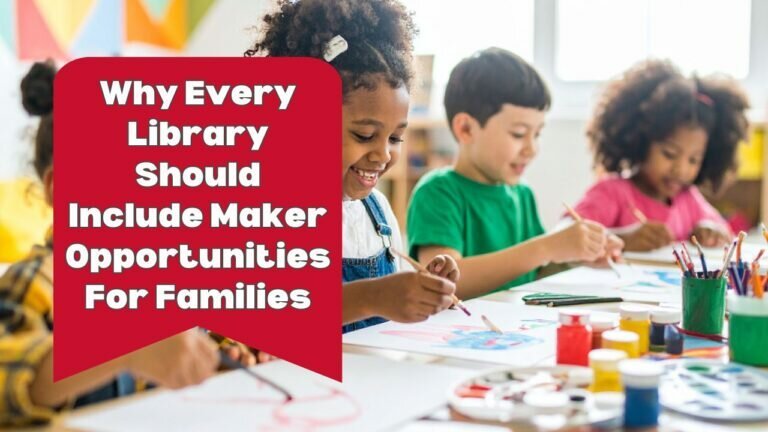
Libraries have always been centers of learning, discovery, and community connection. But in today’s world, where technology evolves quickly and creativity is prized, libraries can take an even bigger role by offering maker opportunities for families.
A family makerspace is more than a room with tools; it’s a space where children, parents, and caregivers can explore, invent, and learn together.
This article will explain why every library should adopt family-focused maker programming, the benefits it offers, the steps to get started, the tools you’ll need, and how to measure success.
Libraries are no longer just book repositories — they are community innovation hubs.
Adding a maker program strengthens their role as places where families can learn, create, and collaborate.
When parents and children make things together, they strengthen family bonds.
It creates opportunities for collaboration, communication, and problem-solving across generations.
Family makerspaces promote STEM learning and critical skills such as creativity, critical thinking, collaboration, and digital literacy. These programs can spark a lifelong interest in science, technology, engineering, art, and math.
Many families cannot afford expensive maker kits, 3D printers, or robotics sets. Libraries offering free access to these tools bridge the opportunity gap and ensure every child and family can participate in 21st-century learning.
Define the purpose of your program. Examples:
- Inspire creativity among families
- Provide hands-on STEM learning
- Support local schools with extracurricular resources
- Create a safe, accessible space for collaboration
See also What We’ve Learned From a Decade of Library Maker Programs
Survey families to learn their interests:
- Do they prefer crafts, robotics, or electronics?
- When are they most likely to attend?
- What barriers (time, cost, transport) might they face?
A family maker program doesn’t need a huge room. Options include:
- A mobile maker cart that rolls between rooms
- A corner of the children’s or teen section
- A dedicated multipurpose room for larger projects
Include modular furniture, storage bins, and safety signage to keep the space organized and flexible.
Libraries can scale their programs based on budget and space.
| Tier | Tools & Kits | Best For | Complexity Level |
|---|---|---|---|
| Starter | Craft supplies, cardboard, glue guns, Snap Circuits, Makey Makey kits | Families with younger kids | Very low |
| Intermediate | 3D printer, robotics kits, micro:bit, Arduino starter kits | Families with older children and teens | Moderate |
| Advanced | Laser cutter, CNC router, VR headsets, advanced electronics | Tech-savvy families | High, requires training |
The key is to start small and expand as demand grows.
Every successful maker program relies on enthusiastic staff.
- Facilitators: Librarians or assistants who guide families, explain tools, and troubleshoot problems.
- Volunteers and mentors: Local makers, teachers, or teens who help run workshops.
- Training: Staff should receive training on tool use, safety, and how to encourage collaborative learning.
Policies protect both families and the library.
- Require orientation sessions before using advanced tools.
- Create user agreements outlining responsibilities.
- Post clear safety instructions near every tool.
- Set age restrictions where appropriate (e.g., soldering only for teens and adults under supervision).
See also Balancing Structure and Exploration in Maker Programs
Families drop in, explore tools, and create projects at their own pace.
Examples:
- “Build a Balloon Car”
- “Create a Family LED Greeting Card”
- “Intro to 3D Printing Together”
Families can check out kits like robotics sets, craft boxes, or electronics to continue learning at home.
Encourage families to compete in fun design challenges like building the tallest spaghetti tower or fastest rubber band car.
Invite families to display their creations in the library for community recognition.
Libraries must track the impact of family maker programs.
| Metric | What It Shows |
|---|---|
| Attendance numbers | Program reach |
| Repeat visits | Sustained family interest |
| Projects completed | Active engagement |
| Feedback surveys | Satisfaction and learning outcomes |
| Partnerships formed | Community collaboration |
Collecting this data helps libraries secure more funding and expand programs.
| Challenge | Solution |
|---|---|
| Limited budget | Start with low-tech supplies, apply for grants, seek donations |
| Staff shortages | Use volunteers, teen mentors, rotate staff |
| Tool maintenance | Buy reliable brands, schedule regular checks |
| Safety concerns | Require orientation, enforce age rules, supervise advanced tools |
| Access inequality | Offer free sessions, flexible scheduling, loanable maker kits |
- Define your vision and goals
- Survey families to identify needs
- Start with a pilot workshop
- Gather feedback and refine the program
- Acquire low-cost tools and supplies
- Train staff and volunteers
- Develop clear policies and safety guidelines
- Promote the program widely to the community
- Track outcomes and success metrics
- Expand gradually with more advanced tools and activities
See also Tiny Hands, Big Ideas – Early Learning Through Library Makerspaces
The future of family maker programs in libraries is bright and evolving.
With rapid advancements in digital fabrication, coding, and robotics, more families will have access to cutting-edge tools that prepare children for tomorrow’s careers. Some forward-looking opportunities include:
- Virtual reality (VR) and augmented reality (AR) projects for immersive learning.
- Eco-friendly maker projects, such as solar-powered gadgets and upcycled crafts.
- Intergenerational learning, where grandparents, parents, and kids collaborate on projects that combine tradition with innovation.
- Partnerships with local schools and universities, ensuring that libraries complement formal education systems.
By keeping programs updated with modern technology and community interests, libraries can remain relevant and impactful for decades to come.
Libraries have always been champions of equity, access, and lifelong learning. By including maker opportunities for families, they take that mission to a new level.
These programs promote creativity, STEM learning, family bonding, and community engagement.
Any library, regardless of size or budget, can start small with craft-based activities and scale up to advanced maker tools over time.
The result is a library that inspires innovation, brings families together, and prepares communities for the future.
Not at all. Many successful programs begin with low-cost craft materials and simple maker kits, then grow as interest builds.
They reinforce STEM learning, boost problem-solving skills, and nurture creativity that supports success in school and beyond.
Yes. Even with limited space or budgets, libraries can use mobile carts, simple materials, and partnerships to make family maker opportunities accessible.